For every working professional in Pakistan, understanding the 2025-26 salary tax slabs is vital. For the purpose of income tax collection from salaried individuals, the Federal Board of Revenue (FBR) revises tax rates every year. These tax slabs show the income tax rate on salary that the FBR in Pakistan charges employees based on their annual earnings.
On their pay slips, employees see the tax deduction that their employer makes every month, but don’t understand the calculation. Knowledge of taxable salary in Pakistan helps employees manage their finances, estimate their tax deductions, and file their tax returns correctly. It also helps employees to plan and save their net monthly take-home salary.
Pakistan has a progressive taxation system, which means that higher taxable income is charged a higher tax. Employers make tax deductions from employees’ salaries on a monthly basis and remit the same to the Federal Board of Revenue.
This guide covers tax slabs, salary tax calculation, filing, and other tax-related important concepts for the tax year 2025-26.
What Are Salary Tax Slabs?
Salary tax slabs refer to the tax credits available to salaried individuals based on their annual income, which are charged at a given tax rate within specific income ranges. The higher the annual income, the higher the tax rate.
Every year, the Federal Board of Revenue publishes revised slabs in the national budget. These budget changes affect employer tax deduction, employee net salary, and payroll calculations.
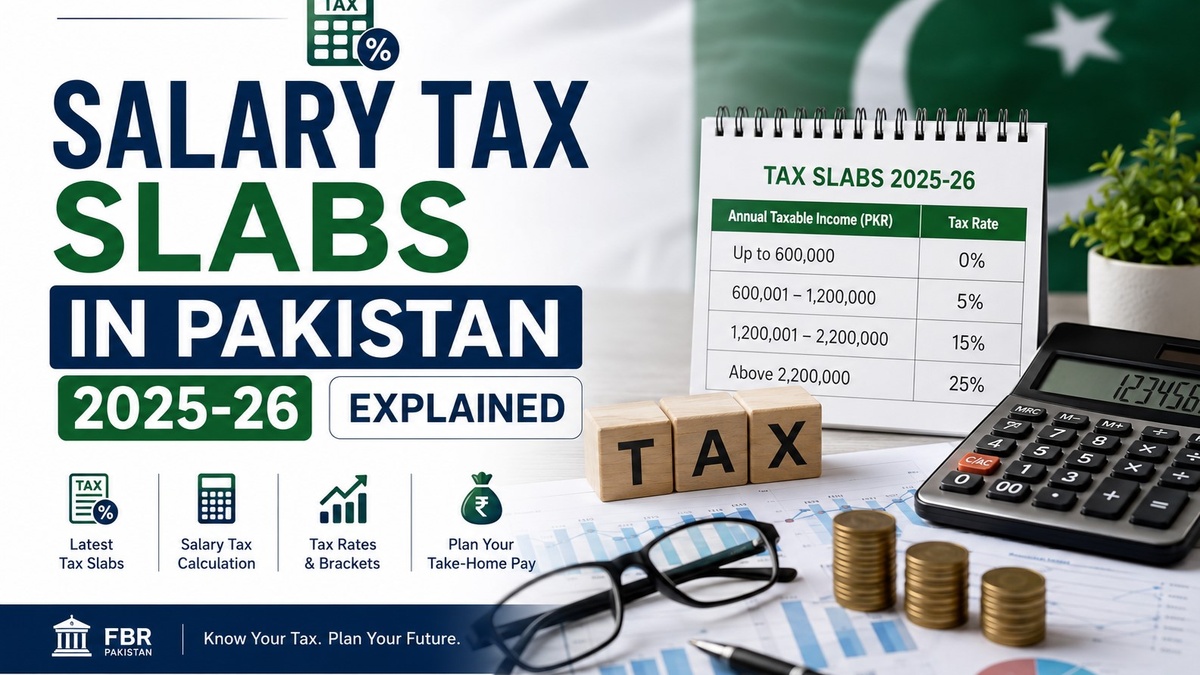
Latest Salary Tax Slabs for 2025-26
Income Up to PKR 600,000
People earning up to PKR 600,000 do not pay income tax. This includes all entry-level employees and many low-income employees.
Income Between PKR 600,001 to PKR 1,200,000
Employees working in this bracket pay tax on income above the minimum threshold. Tax is paid at a low percentage.
Income Between PKR 1,200,001 to PKR 2,200,000
Many mid-level professionals fall in this bracket. Tax is paid at a higher percentage, in a progressive manner.
Income Above PKR 2,200,000
Senior professionals and senior-level executives generally fall in this bracket. They pay higher tax and higher deductions are made from their pay.
Salary Tax Slabs Table
Annual Taxable Income Estimated Tax Treatment
Up to PKR 600,000 0%
PKR 600,001 – 1,200,000 Low tax
PKR 1,200,001 – 2,200,000 Moderate tax
Above PKR 2,200,000 Higher tax
How Income Tax on Salary Is Calculated
Understanding how salary tax is calculated helps employees estimate their deductions themselves.
Step 1: Calculate Gross Salary
Gross salary includes:
Basic salary
Bonus
House rent allowance
Medical allowance
Utility allowance
Other company benefits
Step 2: Deduct Exempt Income
Some allowances and benefits qualify as exempt income under the tax laws. These amounts are to be deducted before measuring the final tax.
Step 3: Determine Taxable Income
The amount left is taxable salary in Pakistan. The tax brackets are then applied.
Step 4: Monthly Tax Deduction
Employers are to determine the annual tax liability and have the tax withheld monthly. This appears on the employee’s salary slips each month.
Why Tax Filing Is Important
Many salaried individuals believe that monthly deductions are sufficient and that filing an income tax return is unnecessary. That is not true; there are several reasons why filing an income tax return is important.
It helps employees:
- Turns them into active tax filers
- It helps in avoiding higher withholding tax rates
- Helps them maintain their financial records
- Helps them in obtaining a visa and bank loans easily
- Helps them in following the Federal Board of Revenue rules
In Pakistan, salaried individuals can file their taxes online through the FBR IRIS portal.
Important Tax Terms You Should Know
Gross Salary
Gross salary is your total income before any deductions.
Net Take-Home Pay
This is the income most employees keep after all taxes and other deductions.
Tax Liability
A tax liability means the total tax that is due on an individual’s annual income.
Salary Bracket
A salary bracket is essentially an income range that dictates the tax rate applied to that income.
Employer Tax Deduction
Employers are responsible for deducting monthly tax from salaries and depositing it with the Federal Board of Revenue.
Salaried vs Non-Salaried Taxation
It is common for most countries, including Pakistan, to have entirely different tax structures and policies for salaried and non-salaried workers. Generally, salaried individuals have different slab rates than business and freelance individuals.
Salaried individuals have a much simpler tax system in Pakistan, as their employers handle monthly withholding tax deductions.
How Tax Slabs Affect Monthly Salary
In Pakistan, in 2025-2026, if the salary tax slabs provide positive tax brackets, individuals will have more disposable income after tax and be able to save more. As tax brackets become less favourable for individuals and tax rates increase, individuals have less disposable income and take-home pay. All employees should keep track of their taxes, as salary increases may move them into a higher tax bracket.
Using a Salary Tax Calculator
A Salary Tax Calculator for Pakistan can help workers estimate their monthly withholdings before they actually receive a paycheck. Users can calculate their annual tax burden by providing details about their total gross pay, bonuses, and allowances.
Those calculations can help employees plan for their budgets, estimate taxes, and anticipate their pay. Employees can also negotiate their salaries and evaluate compensation when comparing job offers.
Many employees rely on the online calculators to estimate monthly payroll withholdings based on the most recent FBR Salary Tax Updates for the 2025-2026 year.
Common Tax Mistakes Employees Should Avoid
Ignoring Income Tax Returns
It is necessary to file tax returns even when an employer withholds tax.
Misreporting Salary Details
Failing to report the correct amount or misreporting salary can lead to a notice from the Federal Board of Revenue for an income tax audit.
Missing Tax Deadlines
Missing a tax filing deadline can result in late-filing penalties and other tax assessments.
Not Checking Pay slips.
Employers should review payroll deductions each month to verify they have not been affected by a payroll error.
Tax Planning Tips for Salaried Individuals
Maintain Salary Records
Pay stubs, deposit slips, and tax receipts should be kept.
Understand Exempt Income
Knowing what qualifies as exempt can help taxpayers avoid burdening themselves.
Monitor Annual Income Threshold
Pay raises can sometimes move an employee into a higher income level.
File Returns Early
Filing taxes before the deadline reduces the penalties and the backlog in the system.
Conclusion
The simplification of salary tax slabs in Pakistan 2025-26 can help employees organise their expected salaries and deductions for better financial planning. Understanding gross salary, withholding tax, exempt income, and tax liability can help reduce confusion during the filing process.
The salary tax slabs in Pakistan 2025-26 will affect monthly salary calculations for employees due to changes in the FBR salary tax rates 2025-26. This will help employees improve their financial planning and reduce filing errors.
Using a monthly salary tax calculator in Pakistan will help employees remain tax compliant and keep their net salary within reasonable limits. Filing taxes will be less burdensome for employees.



Rate Blog
Tap a star to rate this guide. Ratings are open for everyone and are counted immediately.