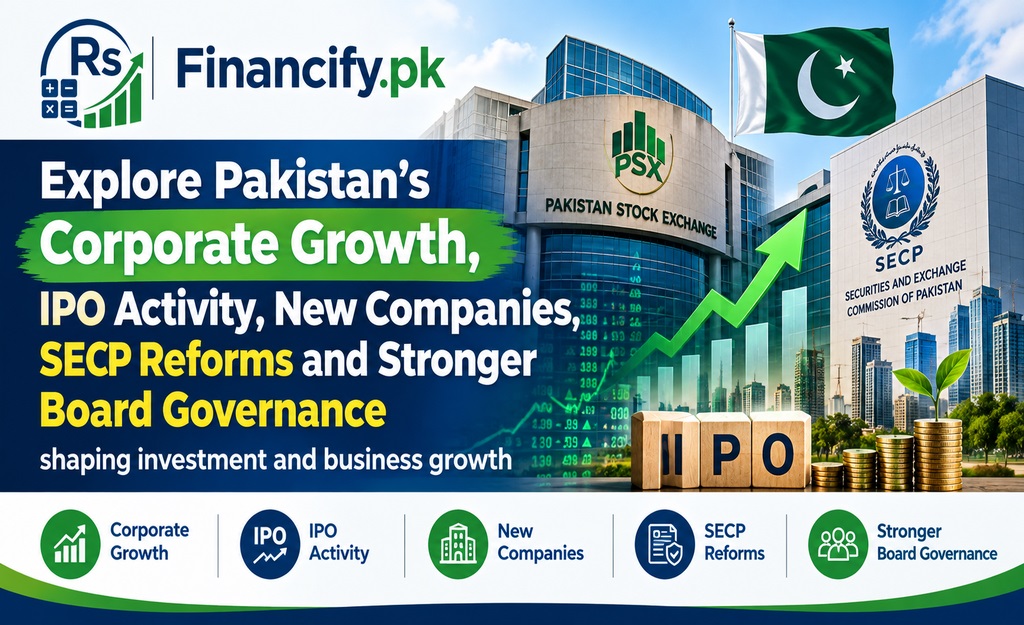
Boards That Finally Have to Do More Than Tick Boxes
If you have been watching Pakistan’s corporate scene only through fuel-price headlines and the daily KSE-100 swing, you have missed the quieter story. Companies are listing, regulators are digitising, and boards are being told politely, but firmly that compliance is no longer enough.
In the first half of 2026 the Securities and Exchange Commission of Pakistan approved ten IPOs. Nine of them actually came to market and together raised more than Rs20 billion. That is not a rounding error. Service Long March Tyres pulled in Rs7.77 billion for a passenger-car tyre plant. Sitara Petroleum was fully subscribed in eight minutes. Ghani Dairies became the first corporate dairy farm on the exchange. Pak-Qatar General Takaful, the first listed non-life takaful company, saw institutional demand 21 times the shares on offer and more than 13,000 retail applications. Wahdat Poultry, REITs, a tech manufacturer and even Pakistan’s first SPACs joined the queue. The mix matters, manufacturing, energy, agribusiness, Islamic finance and technology all showed up at the same window.
That window did not open by accident. SECP has spent the last couple of years stripping friction out of the listing process, easing rules for companies with foreign directors, and pushing digital onboarding. In August alone it registered 4,761 new companies, almost all online taking the national total past 311,000. IT (information technology) led the pack, followed by trading and services. Chinese investors accounted for a large slice of the foreign money coming into those new entities. Last week SECP and Askari Bank finished an API link so a newly registered company can open a bank account with verified data instead of a pile of photocopies. Small change on paper. Big change if you have ever sat in a branch with a file of attested documents.
None of this means the hard part is over. The market still lurches whenever oil spikes or the Strait of Hormuz looks messy. Inflation is creeping again and the State Bank is walking a tight line ahead of its policy meeting. Corporate boards, meanwhile, were told at the PICG Directors’ Summit that “we filed the form” is no longer a strategy. Cyber risk, succession, climate disclosure and actual capital allocation now sit on the same agenda as the annual return. SECP is also chasing ultimate-beneficial-owner filings, 28,761 show-cause notices in one recent sweep, because opaque ownership is no longer an acceptable feature of the landscape.
For a business owner the practical takeaway is simple. Equity is available again if the story is clean and the numbers are real. For an investor the menu is wider than it was two years ago: dairy, tyres, takaful, REITs, SPACs. For everyone else the signal is that the plumbing of corporate Pakistan is being rebuilt even while the macro weather stays unpredictable.
The next few months will tell us whether this is a one-season rally or the start of a deeper listing culture. Watch the remaining IPO pipeline, how quickly new companies actually start operating, and whether boards treat governance as a cost or a competitive advantage. The companies that treat it as the latter are the ones that will still be interesting when the next oil shock arrives.
Building Stronger Companies and Boards
For entrepreneurs looking to open a business in Pakistan, company registration is only the beginning. Whether forming a private limited company or a public company, understanding the types of company, limited liability, corporation tax, and how to establish a business bank account is important for long term growth. Some governance responsibilities are legally required, particularly as businesses expand or consider raising capital through the stock exchange. Effective company directors, including corporate directors, should ensure the board of directors provides strategic oversight rather than managing day to day operations. Each board member should understand their responsibilities, while the audit committee and nominating committee can strengthen accountability and leadership. How often the board meets will depend on the organisation and its governance needs. Our frequently asked questions below provide further guidance on company formation, investment and corporate governance.




Rate Blog
Tap a star to rate this guide. Ratings are open for everyone and are counted immediately.