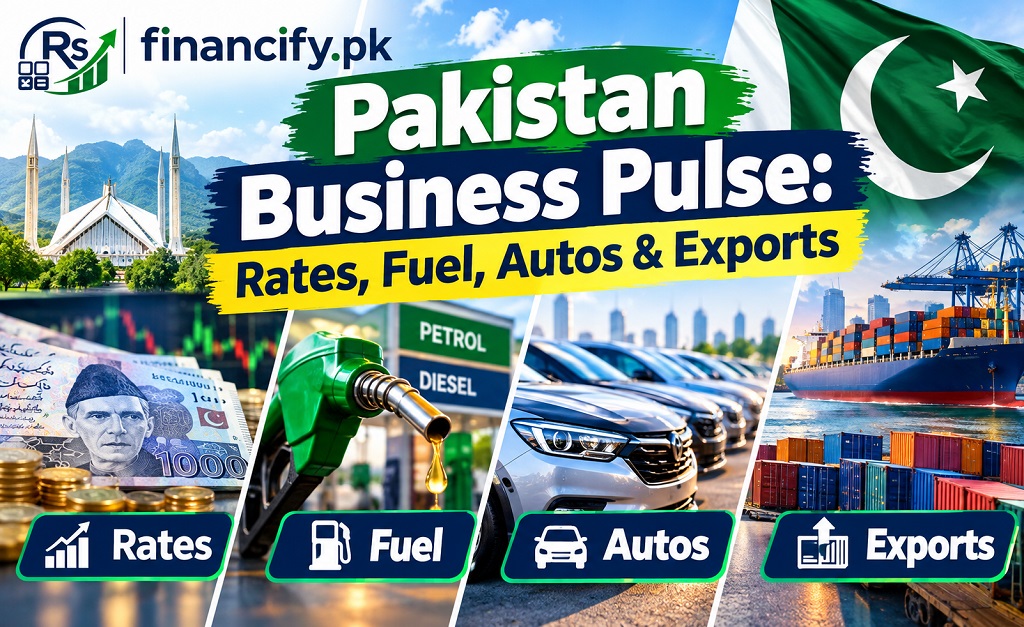
If you run a shop, a factory, a fleet or an import-export desk, this week is not abstract. Fuel went up again. The central bank sits today with oil prices hanging over the table. A new auto policy is being picked apart in Islamabad. And the government is trying to push more goods — not just IT invoices — out of the country.
The rate call that every borrower is watching
The State Bank’s Monetary Policy Committee meets with the policy rate at 11.5 percent. Half the market expects no change. The other half is pricing a 50-basis-point hike because crude has jumped on Middle East supply fears.
Domestic numbers are not collapsing. Reserves have been rebuilt, the current account has been surprisingly contained, and last year’s fiscal deficit was the lowest in two decades. The worry is second-round inflation if diesel and petrol stay expensive. For anyone with working-capital lines or planned capex, a hold versus a hike is the difference between “manageable” and “we wait another quarter.”
Fuel is already in the P&L
Diesel has crossed Rs400 a litre. Petrol is in the mid-370s after another fortnightly increase. That is not a headline for commuters only. It is freight, gensets, last-mile delivery, and the cost of every carton that moves on a truck. Weekly inflation (SPI) is already feeling onions and petroleum. If you quote prices 30 or 60 days forward, you need a fuel clause or a wider margin. Hoping it reverses next fortnight is not a plan.
Autos: policy on paper, fight in the room
The new auto policy is the other big commercial story. One camp wants more localisation of complete cars. Another, and this is the smarter commercial argument says Pakistan should scale components and exports instead of chasing another round of CKD assembly that never quite becomes local. Approval is also being tied to IMF consultations, so the fine print may still move.
Used-car imports have already dropped. That matters for workshops, spare-parts traders and anyone who finances vehicles. If you sell to the auto chain, read the policy as a demand map, not a press release.
Exports and SMEs: the government is finally talking risk, not just slogans
Finance Minister Aurangzeb has been repeating the same line: services (IT around $4.6 billion, freelancers around $1.7 billion) are doing their bit, goods exports still sit near a $30 billion base that is not enough. A Rs3 billion SME risk pool with Pak EXIM is meant to make export credit insurance actually usable for smaller shippers. That is the piece that matters if you are a mid-size manufacturer who has been told “export more” for ten years and never got the guarantee.
GSP+ with the EU is also in play, Pakistan will have to reapply under tighter rules. If Europe is a real customer for you, treat compliance as a sales cost, not an afterthought.
Markets: oil is writing the daily script
PSX has been swinging with every oil spike and every rumour of de-escalation. That is normal when energy is both an import bill and a sentiment switch. Do not confuse a 1,600-point bounce with a new bull market. Liquidity and rates still set the tone for listed companies that actually sell things in Pakistan.
What to do this week if you are running a business
- Re-price freight and energy in your quotes now, not after the next notification.
- If you have floating-rate debt, model both a hold and a 50 bps hike.
- If you are in autos or auto parts, map the policy to your SKUs instead of waiting for the official summary.
- If you export, ask your bank whether the new SME risk pool changes your limit or premium.
- Keep one eye on the IMF team due later this month, tax and energy circulars often follow the review.
Pakistan is not in a 2023-style crisis. Growth last year was about 3.7 percent, reserves are healthier, and the fiscal story is better than it has been in a long time. The commercial risk right now is imported: oil, geopolitics, and policy documents that still argue with themselves.
Stay liquid, stay priced, and do not let a single week’s headlines rewrite a twelve-month plan.
(This content was generated with the assistance of artificial intelligence. The editorial review and final approval were carried out by the Financify team. This material is for informational purposes only and should not be considered professional financial, investment, or legal advice. Readers are encouraged to verify details independently and consult qualified advisors before making any decisions.)




Rate Blog
Tap a star to rate this guide. Ratings are open for everyone and are counted immediately.